 English
Views: 0 Author: Site Editor Publish Time: 2026-05-06 Origin: Site
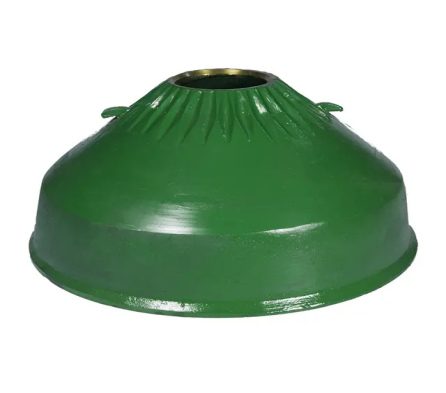
The crushing wall is a vulnerable component directly involved in the crushing operation of the cone crusher. As the running time of the equipment accumulates, the surface of the crushing wall will gradually wear down, the thickness will decrease, the shape of the crushing chamber will change, and the discharge port will continue to increase. When the wear reaches a certain level, continuing to use not only affects the particle size and production efficiency of the product, but may also cause equipment failure due to insufficient strength of the broken wall structure. Therefore, accurately determining the timing of replacing the broken wall is a basic task in the daily maintenance and management of cone crushers. The following provides specific criteria for judgment based on factors such as wear, cracks and fractures, the ability to adjust the discharge port, and the state of eccentric wear.
1、 Thickness wear reaches two-thirds of the original thickness
The thickness and wear of the broken wall are intuitive quantitative indicators for determining whether replacement is needed. In practical engineering, when the thickness wear of the broken wall reaches about two-thirds of its original thickness, that is, the remaining thickness is about one-third of the original thickness, replacement should be considered.
The basis for this judgment criterion is that as the fractured wall significantly thins, its ability to resist impact loads decreases. During the crushing process, the crushing wall needs to withstand high-frequency compression and impact forces from the material. When the thickness is too thin, local areas may experience excessive elastic deformation, which can lead to the initiation and propagation of microcracks. At the same time, the surface hardening layer of the severely worn broken wall is usually completely worn off, and the material below is accelerated under continuous impact, resulting in a short remaining life for continued use. However, the downtime required for replacement is fixed. Therefore, from the perspective of maintenance economy, arranging replacement when the thickness wear reaches two-thirds can avoid unplanned downtime.
In specific operations, maintenance personnel can use calipers or specialized measuring tools to measure the remaining thickness at different heights of the broken wall (upper, middle, lower), using the parts with relatively severe wear as the judgment criteria. Some equipment manufacturers may provide specific remaining thickness values in the product manual (for example, if the original thickness is 200mm, it is recommended to replace it when the remaining thickness is less than 70mm), and users should refer to the corresponding equipment maintenance manual for implementation.
2、 Cracks or local ruptures appear
When cracks or local ruptures appear on the broken wall, regardless of whether the thickness wear reaches two-thirds of the standard, the machine should be stopped immediately for replacement. This principle takes precedence over the judgment of thickness and wear.
There may be multiple reasons for the occurrence of cracks, including the propagation of casting defects under service stress, fatigue cracks caused by long-term alternating loads, local impact damage caused by metal debris entering the crushing chamber, and rupture caused by excessive installation preload. Regardless of the reason, once visible cracks are found on the surface of the broken wall, or abnormal metal impact sounds are heard during equipment operation and the machine is stopped for inspection and found to be broken, it should not be continued to be used.
Continuing to use fractured walls with cracks carries the following risks: the cracks rapidly propagate during subsequent operations, which may cause the entire fractured wall to crack or even detach. The detached fragments may get stuck between the crushing chamber and the discharge port, which may damage the mill bowl wall, body, and even the main frame, leading to increased maintenance costs and longer production downtime. Therefore, regular inspections (such as once a week or every two weeks) of the broken wall surface condition and timely detection of cracks are also important aspects of equipment management.
3、 The ore discharge port has been adjusted to its limit but still cannot meet the product particle size requirements
The cone crusher controls the product particle size by adjusting the gap (discharge port) between the crushing wall and the mill bowl wall. As the broken wall wears down, the discharge port will gradually increase. Equipment is usually equipped with a discharge port adjustment mechanism (such as hydraulic adjustment or mechanical adjustment device), which can compensate for the gap expansion caused by wear within a certain range.
When the crushing wall is severely worn, even if the adjustment mechanism is adjusted to the limit position, the size of the discharge port is still greater than the upper limit required by the process. At this time, the particle size of the crushed product exceeds the standard and cannot meet the feeding requirements of the next process. This phenomenon indicates that the broken wall has reached the end of its service life, and continued use will only continue to produce substandard products, while increasing the energy consumption of material recycling and crushing. In this case, the broken wall should be replaced.
It should be noted that different types and specifications of cone crushers have different allowable discharge port adjustment ranges. The user should combine the product particle size detection data with the broken wall wear record, and arrange a replacement plan before the adjustment allowance at the discharge port is used up, to avoid being forced to stop the machine urgently due to sudden particle size exceeding the standard.
4、 Obvious eccentric wear leading to local failure
In practical use, due to feed segregation, inconsistency between the centerline of the feed port and the centerline of the crusher, and other reasons, there may be a significant faster wear on one side than the other, or a significant difference in wear between the upper and lower parts of the broken wall.
In the state of eccentric wear, the thickness of a certain local area of the broken wall may have dropped to the level that needs to be replaced, while the thickness of other areas is still acceptable. If continued to be used at this time, there is a risk of cracking in areas that are too thin locally. From a technical perspective, for cases of uneven wear, the most severely worn local area should be used as the basis for replacement judgment, rather than taking the average thickness.
The crushing wall of some cone crushers is designed as a symmetrical structure. When the eccentric wear is not too severe, the wear position can be redistributed by rotating the crushing wall by a certain angle (such as 180 °) to extend the service time. However, it should be noted that the rotation operation is only suitable for situations where eccentric wear has not yet caused serious thickness exceedance in the local area. Once the local thickness has fallen below the safe value, rotation cannot change the fact that it has already been thinned, and it should be replaced directly.
5、 Repeated tightening after loosening is ineffective
The broken wall and the body are filled and fastened with zinc alloy or epoxy resin. During normal use, if the broken wall becomes loose due to insufficient filling, insufficient pre tightening force, or excessive wear, the operator can tighten it according to the prescribed procedure. But it needs to be replaced in the following situations:
After two or more fastening operations, the equipment becomes loose again shortly after operation;
Upon dismantling and inspection, it was found that the contact surface between the inner side of the broken wall and the body had worn and deformed, making it impossible to achieve reliable fixation by refilling;
During the fastening process, visible deformation or cracks were found on the broken wall.
Repeated loosening usually indicates that the structural integrity of the broken wall has been compromised. Continuing to maintain use not only affects the crushing effect, but may also cause damage to the surface of the body. At this point, replacing the broken wall is more economical than repairing it.
6、 Comprehensive confirmation before replacement
At the actual production site, it is recommended to use the following comprehensive confirmation process to determine whether the broken wall needs to be replaced:
Thickness measurement: Measure the remaining thickness at the upper, middle, and lower parts of the broken wall, record and compare the original thickness data.
Appearance inspection: Check for cracks, peeling, gaps, or obvious plastic deformation.
Discharge port status: Confirm the current discharge port size and the remaining adjustment margin of the adjustment mechanism.
Product particle size detection: Sample and analyze whether the product particle size is still within the allowable range.
Comparison of historical records: Review the cumulative tonnage and usage time of materials processed by the broken wall, and make a judgment based on past life data under the same working conditions.


